One of Australia's most respected critical care educators has turned his attention to the Northern Territory.
St John NT has engaged critical care paramedic Sam Immens to design and deliver its new Intensive Care Paramedic (ICP) Training Pathway.
With more than 25 years’ experience across emergency nursing, paramedicine, aeromedical retrieval and critical care, Sam now leads critical care paramedic education for NSW Ambulance.
Throughout his career, he has worked across major trauma hospitals, ambulance services and Special Operations environments, building a reputation for developing advanced clinicians and clinical leaders.
St John NT’s new ICP pathway has been developed to strengthen advanced clinical capability within the organisation and support the next generation of Territory Intensive Care Paramedics.
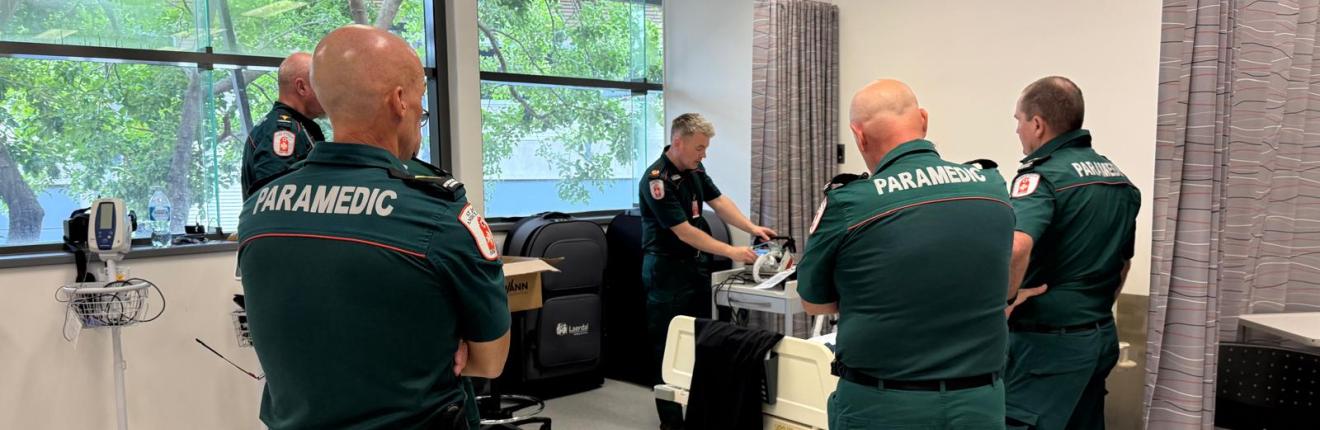
Beginning in July, six experienced St John NT paramedics will undertake the first stage of the programme through a six-week intensive education component before progressing through a structured two-year training and mentoring pathway.
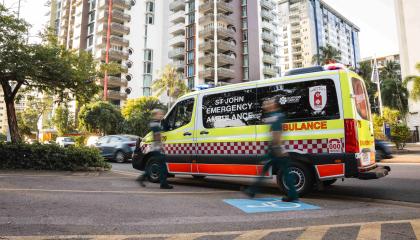
As part of the pathway's development, Sam spent four weeks immersed in St John NT ambulance operations, joining crews on-road in Darwin and Alice Springs, supporting medical coverage at the Tatts Finke Desert Race and gaining firsthand insight into pre-hospital care across the Territory.
“Before building the programme, it was important to understand the environment Territory clinicians work in and the challenges they face every day,” Sam said.
“The Territory has a reputation for attracting clinicians who want to challenge themselves and practise at a high level, and that reputation is well deserved.
“What impressed me most was the capability of St John NT’s people. Crews consistently deliver exceptional patient care across vast distances, often with fewer resources immediately available than clinicians in larger jurisdictions.
“In many parts of Australia, additional clinical resources, specialist teams or aeromedical support can be brought to a patient relatively quickly. Territory paramedics don't always have that luxury.
“What they do have is strong clinical judgement, adaptability and an ability to make good decisions in complex environments. That's what makes them such impressive clinicians.”
St John NT Deputy Medical Director Dr David Monks said Sam's involvement formed part of a broader investment in advanced clinical capability across the organisation.
“Sam is highly regarded across Australia for his experience in critical care paramedicine and clinician development,” Dr Monks said.
“He has spent decades working at the highest levels of pre-hospital healthcare and developing some of Australia's most capable clinicians.
“Having someone of his calibre working alongside our people, sharing his knowledge and continuing to mentor clinicians throughout the pathway is an enormous opportunity for St John NT and for the Territory.”
Dr Monks said the pathway is one part of a broader investment in advanced clinical capability across St John NT.
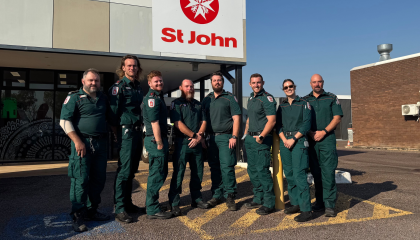
In addition to the six clinicians undertaking the pathway, St John NT has recently recruited four experienced Intensive Care Paramedics, bringing almost 100 years of combined paramedic experience and strengthening the service’s critical care capability.
All of the organisation’s existing Intensive Care Paramedics have also undertaken High Acuity Low Occurrence (HALO) training in finger thoracostomy. The advanced procedure is a potentially life-saving intervention for patients with specific life-threatening chest injuries, which has now been reinstated.
Delivered by Dr Monks over three sessions, the training provided clinicians with the practical skills and assessment required to safely perform the procedure in critical emergencies.
ICPs will complete training for another HALO procedure – Front of Neck Access (FONA) – in August. Dr Monks emphasised the value of the training and the availability of these procedures pre-hospital.
“The Territory presents unique challenges when it comes to emergency healthcare,” Dr Monks said.
“Our clinicians often care for critically unwell or injured patients in environments where distance, geography and access to additional resources can significantly influence the response.
“That reality demands a high level of clinical skill, judgement and adaptability from our people every day, and having clinicians trained and authorised to perform advanced procedures such as finger thoracostomy strengthens the life-saving care ICPs provide to Territorians, particularly in remote and regional communities.
“Whether it's attracting experienced clinicians, maintaining advanced procedural capabilities or developing the next generation of Intensive Care Paramedics, every investment we make has the same goal: improving outcomes for Territorians.”
Looking ahead, Sam said the Territory's greatest asset remains its workforce.
“The future of any ambulance service is its workforce, and what I've already experienced at St John NT is a team with enormous talent, commitment and potential,” Sam said.
“The Territory already has outstanding paramedics. My job is to help them become even better.”