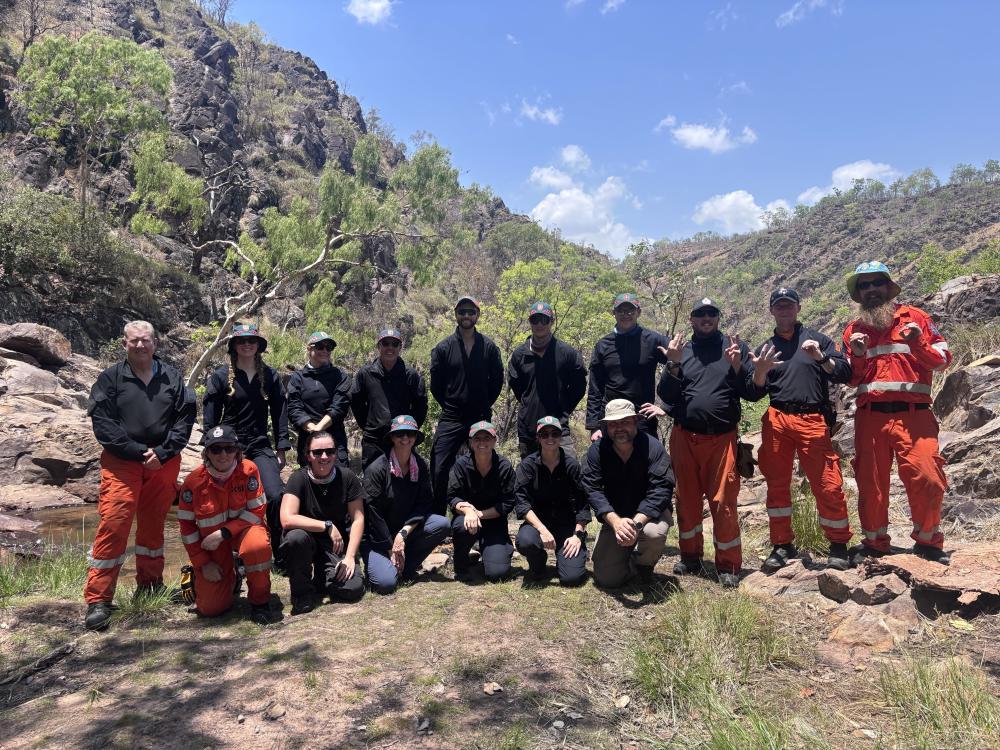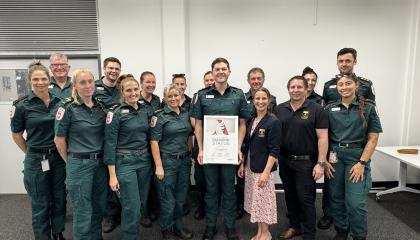
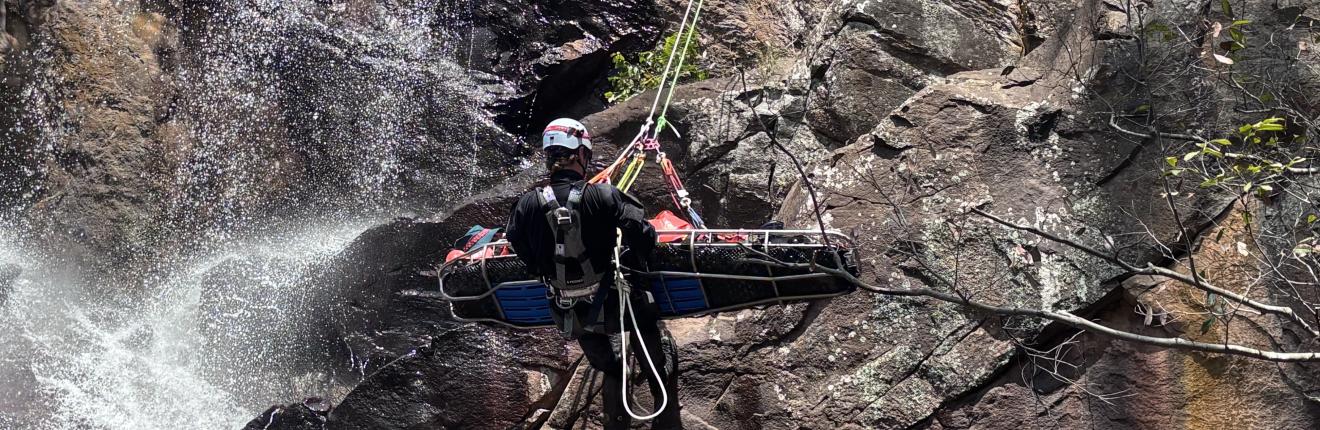
Eight St John NT paramedics have undertaken the organisation's inaugural Remote Access Paramedic course, developing specialist skills to reach, treat and evacuate patients in some of the Territory's most challenging environments.
From remote walking tracks and steep escarpments to waterfalls, gorges and bushland far from the nearest road, the Territory’s unique landscapes can present significant challenges when someone needs emergency medical care.
Designed specifically for tough and demanding locations, the five-day course equipped experienced paramedics with the skills to save lives in places ambulances cannot reach.
Led by St John NT Clinical Support Officer and Intensive Care Paramedic James Rowland and Northern Territory Emergency Services (NTES) Manager Learning and Development Oliver Strode, the training combines clinical care, technical rescue skills and wilderness operations, covering:
- Rope systems, abseiling and vertical rescue
- Patient packaging and stretcher evacuation across difficult terrain
- Navigation, communications and search and rescue planning
- Prolonged patient care in remote environments
- Environmental hazards, including extreme heat
- Helicopter landing-site assessment and evacuation planning.
Complex practical exercises included vertical rescue training at Dudley Point and an extended overnight search and rescue scenario at Robin Falls in Litchfield National Park, where paramedics put the new skills into practice, managing patient care while navigating difficult terrain and planning a safe evacuation.
Mr Rowland said the course was designed to prepare paramedics for situations where patient access and extrication can be just as challenging as treatment.
“When we respond to an emergency in a remote location, the ambulance might only get us to the nearest road or car park. From there, we could still be kilometres away from the patient, with difficult terrain and limited equipment to work with,” Mr Rowland said.
“This training is about developing the skills to safely bridge that gap, so our paramedics can reach patients, provide the care they need and work alongside specialist rescue teams to get them out.
“This course is pretty significant for St John NT and being able to equip more of our paramedics to respond to complex remote emergencies will make a real difference.”
St John NT Director of Ambulance Services Sam Kellick said the Remote Access Paramedic capability was an important step in strengthening the service's response to emergencies across the Territory.
“The Northern Territory presents some unique challenges for our paramedics, and it's important that our training and capabilities reflect the environments our crews are called to work in,” Mr Kellick said.
“Having eight paramedics undertake this inaugural course is an important first step in building a specialist capability that will support our existing ambulance operations and emergency service partners.
“Ultimately, this is about making sure patients can receive high-quality care, even when they're a long way from the nearest road.”